Cultural Commentary: Fenty Beauty’s Role in Revolutionizing the Beauty Industry.
In a world where women are judged so harshly, for everything from the way they behave, to the way they look down to their body types and their skin, few things have been created to make women feel more confident in their own skin as much as makeup.
However, even makeup over the years has been weaponized to cater to and uplift only a certain group of women, particularly ones with fair skin and Eurocentric features, while deliberately leaving other groups of women behind by showing little to no representation. Beauty campaigns also reflected this exclusion, representing only a certain standard of beauty while blatantly disregarding everyone else. However, something shifted the beauty industry in mid-2017.
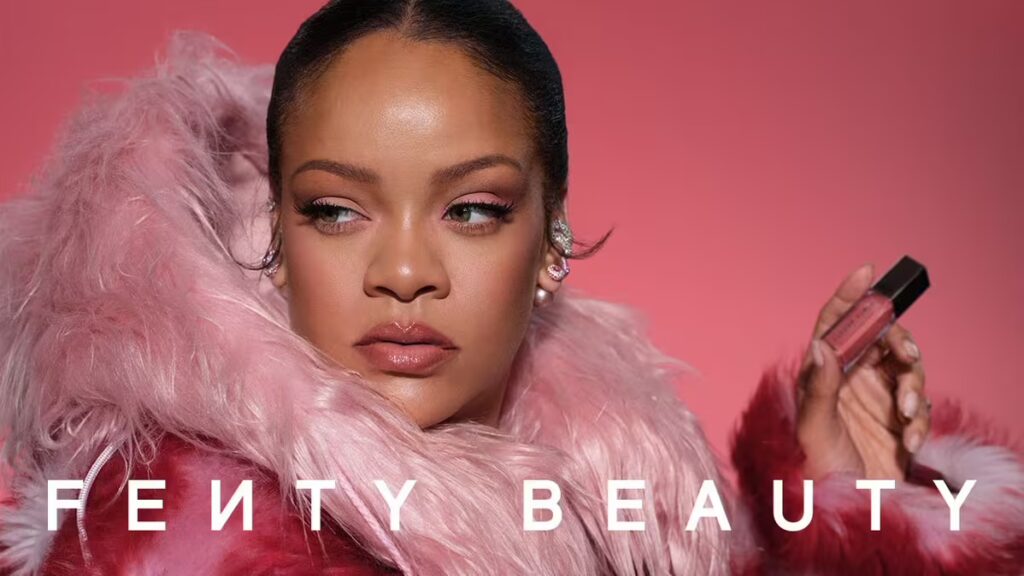
Fenty Beauty launched in September 2017, and expectations were sky-high. Its founder, Rihanna, was not only a trailblazer in music but held other roles as a cultural tastemaker and fashion maven, she also had the backing of one of the biggest fashion houses, LVMH.
For a celebrity beauty brand, the stakes were clear: this couldn’t just be another vanity project or a money grab moment – they would have to create something extraordinary.
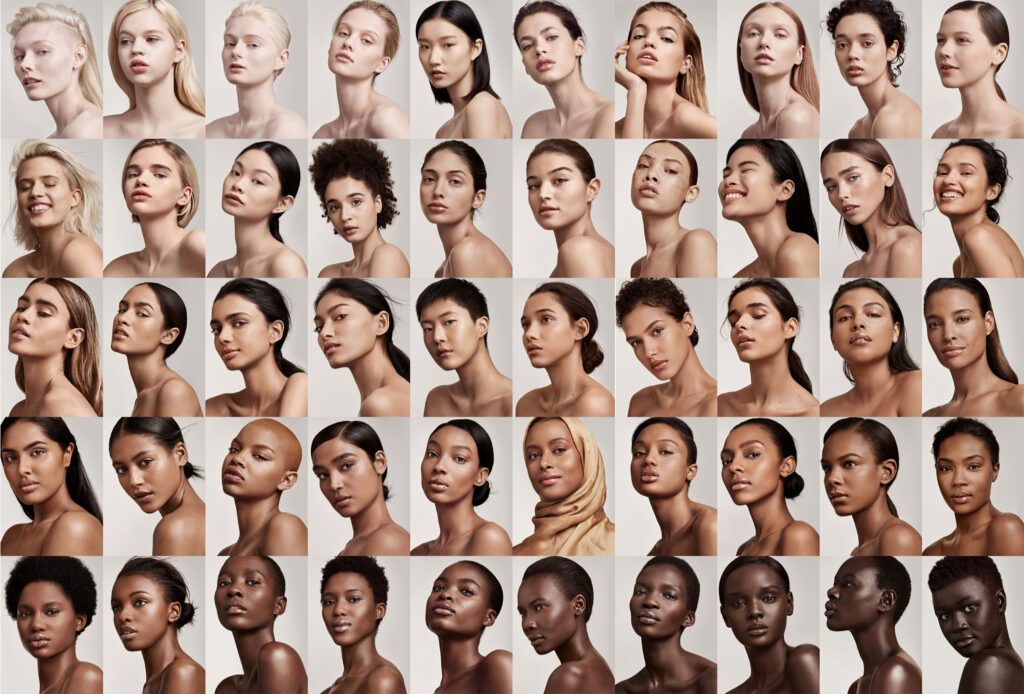
And Fenty didn’t disappoint. They came out with guns blazing, and their debut product rollout redefined the industry overnight. Their first major launch, the iconic foundation called Pro Filt’R came with a range of 40 shades (now 52) with color swatches to match almost every skin tone.
Their launch campaign was just as bold, including women of every heritage, skin tone and background, from a hijabi model to everyone else who did not fit the mold of the Eurocentric beauty ideals mainstream beauty brands continued to push.
“Beauty for All.”
Rihanna, Founder
For years, it was obvious that women were penalized in the beauty world for not fitting those Eurocentric beauty standards. Dark-skinned consumers complained about foundation shades never matching and having to create their own by mixing multiple shades. Fenty made it a point to acknowledge and bridge this gap in the market. They wanted to change the narrative of exclusion and it was no longer a conversation they were going to shy away from.
Their impact was seismic.
Time magazine named it one of the 25 Inventions of the Year, after which the “Fenty Effect” took over the industry.
Beauty houses suddenly had to extend their shade ranges to cater to different skin tones. This also sparked a wider conversation online about how dismissive and inconsiderate beauty brands were prior to Fenty setting the bar. From then on, any beauty brands with less than 40 shades were deemed unworthy of attention. Inclusivity was no longer a choice but rather the norm.
For many women, Fenty Beauty was the first brand that made them feel seen, considered and appreciated. The proof was in the sales as some of the darkest shades of Fenty Beauty foundations were the first ones to sell out, which just proved that there was a big gap in the market and emphasized the buying power of consumers who had long been ignored.
Modified Version:
The Fenty Effect: How Fenty Beauty Revolutionized the Beauty Industry
If you’ve been following beauty blogs, YouTube reviews, or Instagram launches over the past decade, you know that 2017 was a turning point. Not just another celebrity brand launch — but a cultural reset.
In a world where women are constantly scrutinized — for their bodies, their skin, their features, their age — makeup has often been one of the few tools that helps us reclaim confidence on our own terms. But for years, even the beauty industry itself didn’t feel inclusive. Foundation ranges were limited. Campaigns centered eurocentric features. And women with deeper skin tones were often forced to mix multiple shades just to get a close match.
Then came Fenty Beauty.
When Rihanna announced the launch in September 2017, expectations were high. She wasn’t just a pop star attaching her name to a product — she was already a global fashion and cultural icon, backed by LVMH. Beauty insiders, bloggers, and consumers alike were watching closely. The question was: would this be another celebrity vanity project, or something bigger?1
It was bigger.
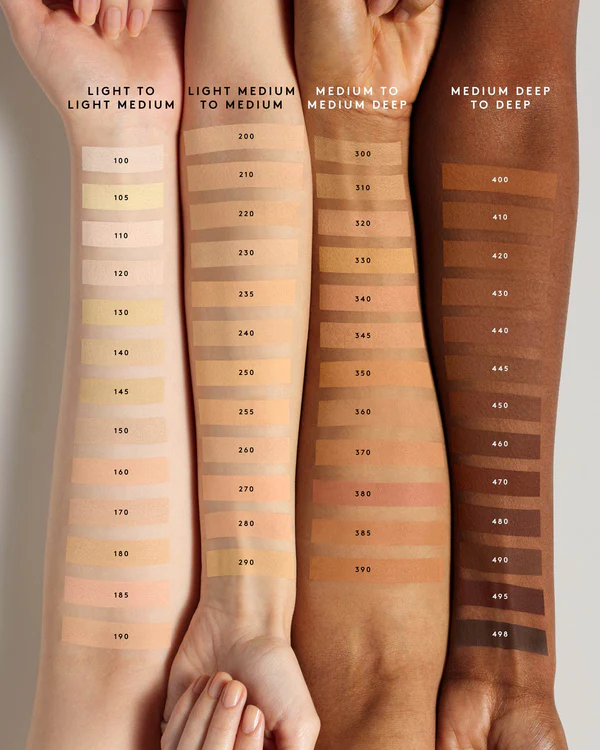
Fenty Beauty launched with Pro Filt’R Foundation in 40 shades (now expanded to 52).
At the time, that number was almost unheard of. But it wasn’t just about quantity — it was about intention. The shade range included undertones and depth that genuinely reflected real skin tones across the spectrum.
The campaign visuals were equally intentional. Models of different races, religions, and backgrounds — including a hijabi model — were front and center. This wasn’t token representation. It felt deliberate, thoughtful, and long overdue.
For women who had spent years feeling like an afterthought in beauty aisles, this was validation. Darker-skinned consumers had been vocal for years about being overlooked. Fenty didn’t just acknowledge the gap — it built its launch strategy around closing it.
The impact was immediate. Time magazine named Fenty Beauty one of the 25 Best Inventions of 2017. Beauty commentators quickly coined the term “The Fenty Effect” to describe what followed.
Suddenly, brands that had comfortably launched with 12 or 20 shades were scrambling to expand. Inclusivity was no longer a progressive bonus — it became the baseline expectation. Beauty lovers online began calling out brands with limited ranges. Anything under 40 shades felt outdated. The standard had shifted overnight.
And the sales spoke volumes. Some of Fenty’s deepest shades were among the first to sell out — directly challenging the long-standing industry myth that deeper tones “don’t sell.” The demand had always been there. It simply hadn’t been respected.
For many women in their twenties and thirties — especially those who grew up watching beauty evolve through Tumblr, YouTube tutorials, and influencer culture — Fenty Beauty marked a moment when the industry finally started listening.
It wasn’t just about foundation. It was about visibility. Consideration. And the power of consumers who had been ignored for far too long.
That’s the Fenty Effect — not just a product launch, but a cultural shift that redefined what inclusivity in beauty truly means.
Prompt Used: Can you modify and make this a clearer, more focused version tailored to women in their mid-20s to mid-30s who actively follow beauty news, launches, and cultural conversations in the industry?